Garage Door Repair Photos: Springs, Tracks, Cables and Openers
What the Pictures Show
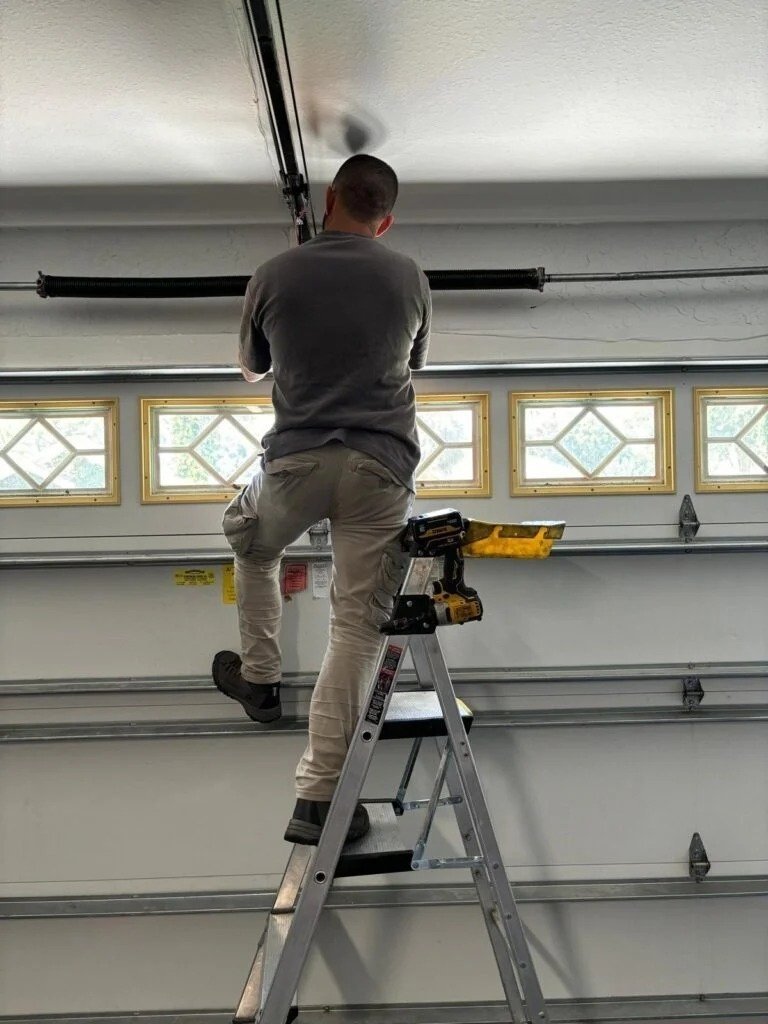
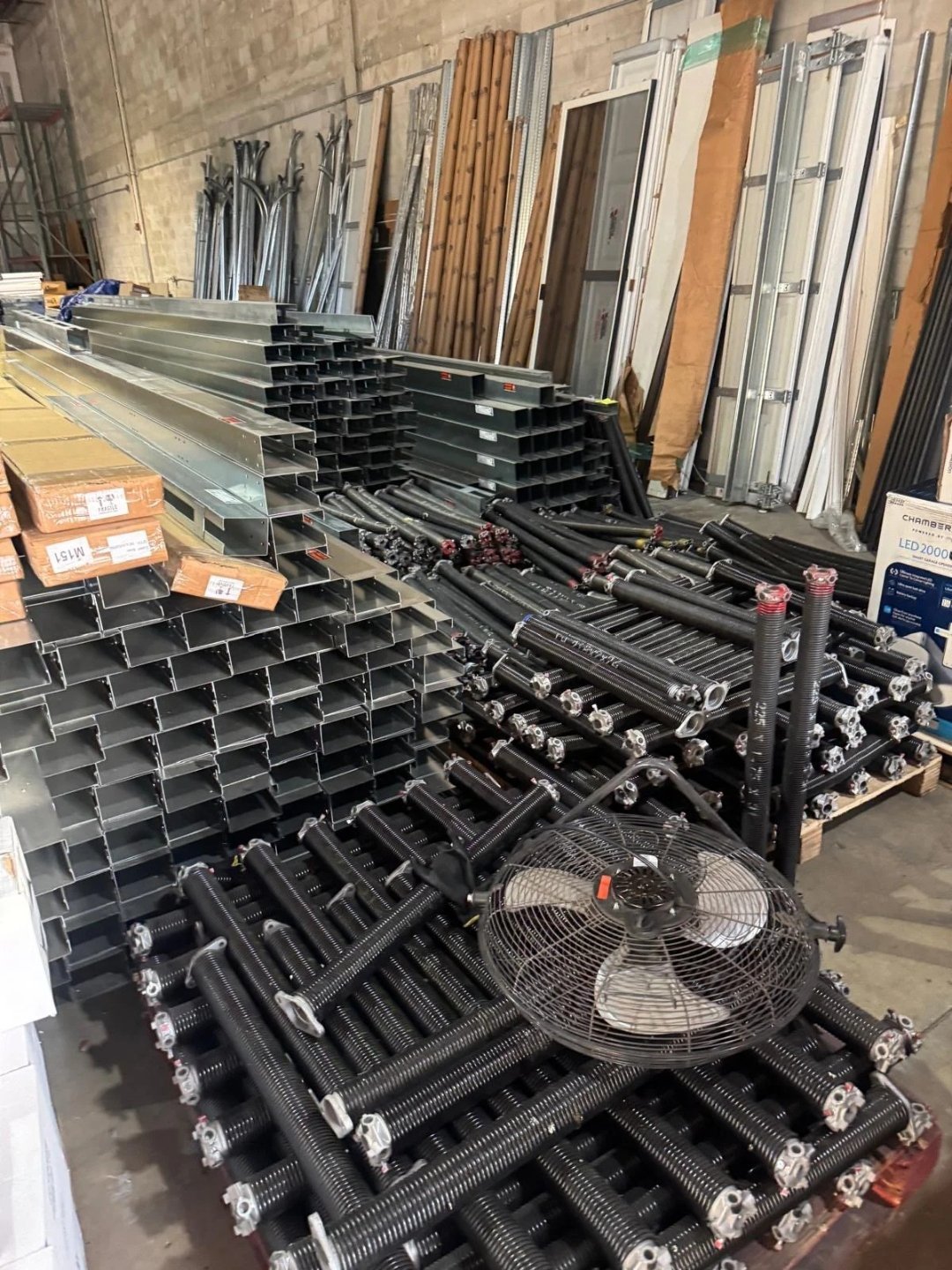
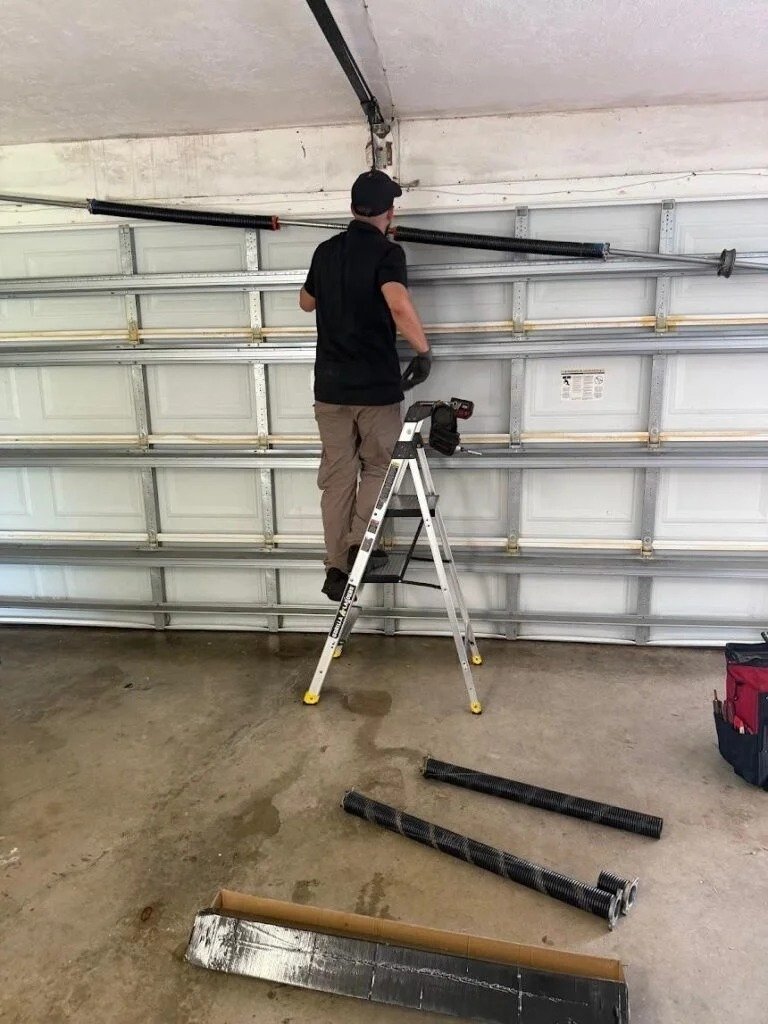
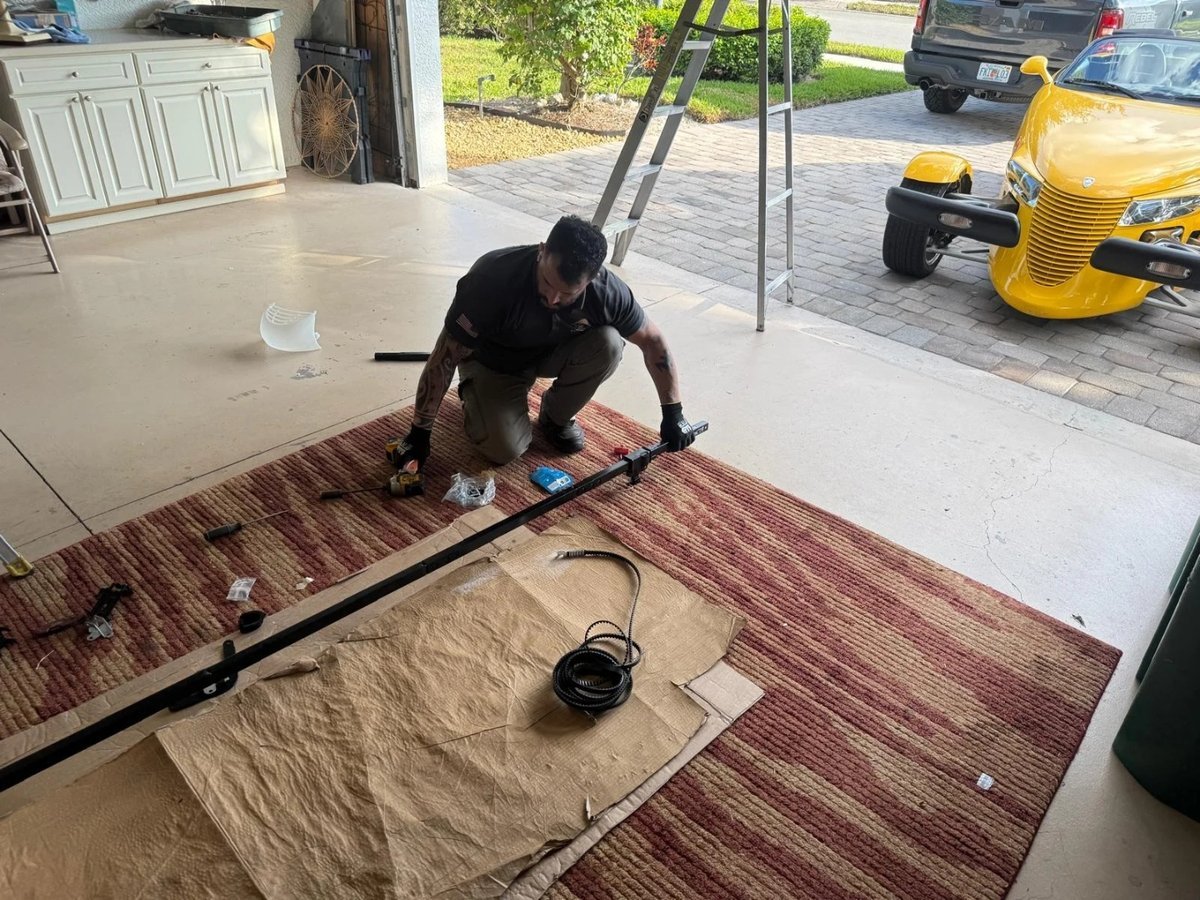
Tap a picture to open it full size; the description under each one in your screen reader names the part being worked on.
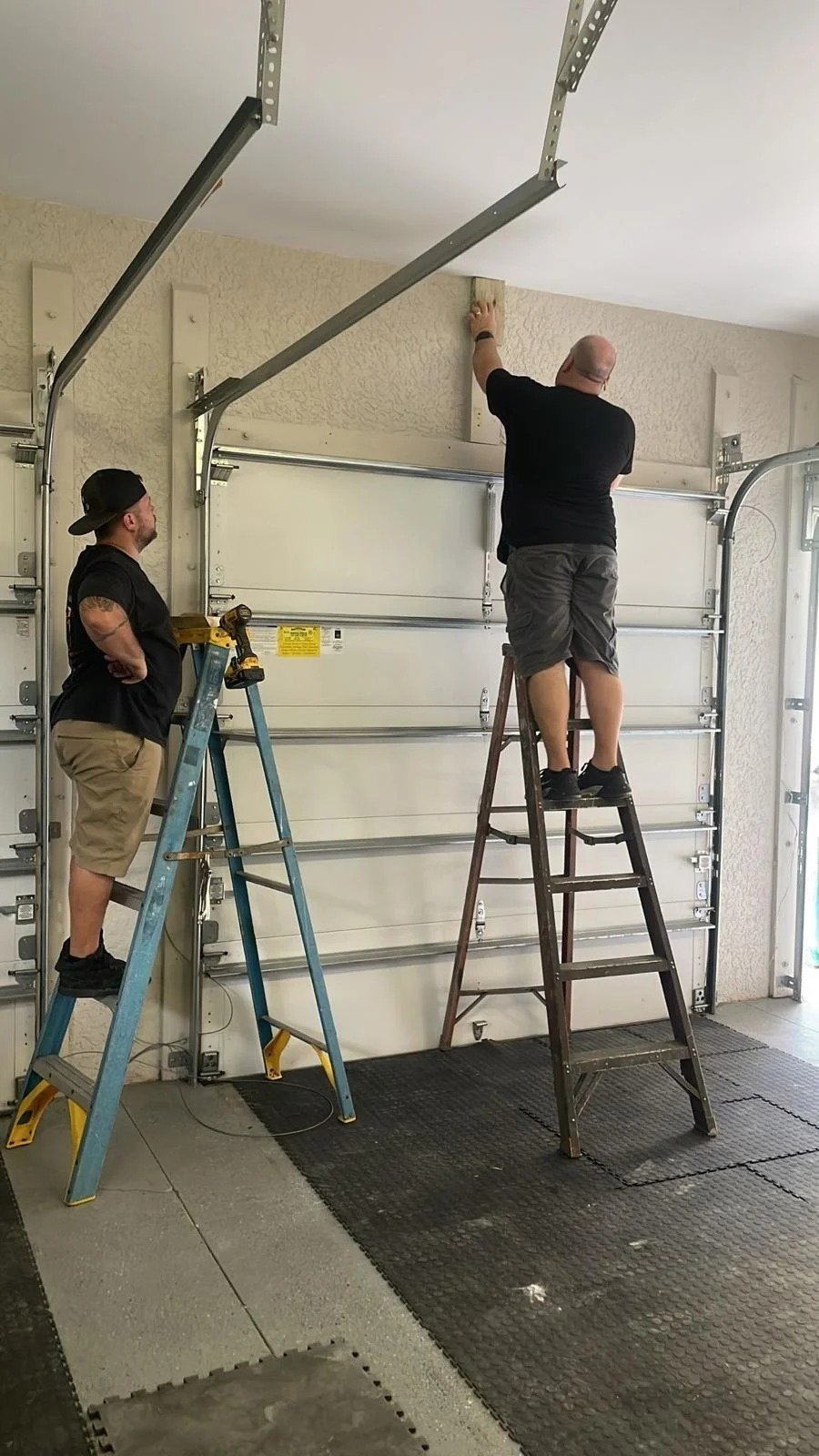
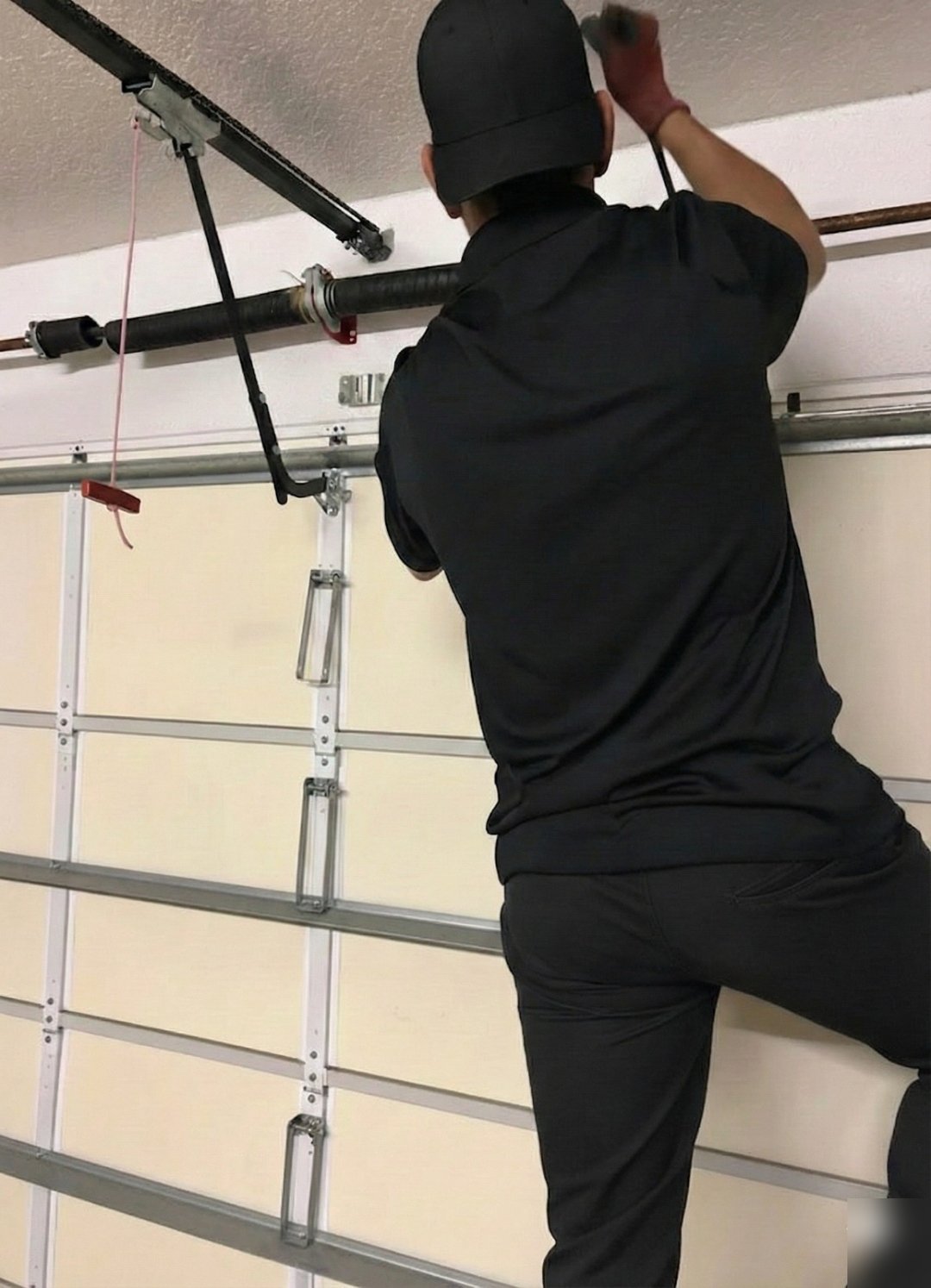
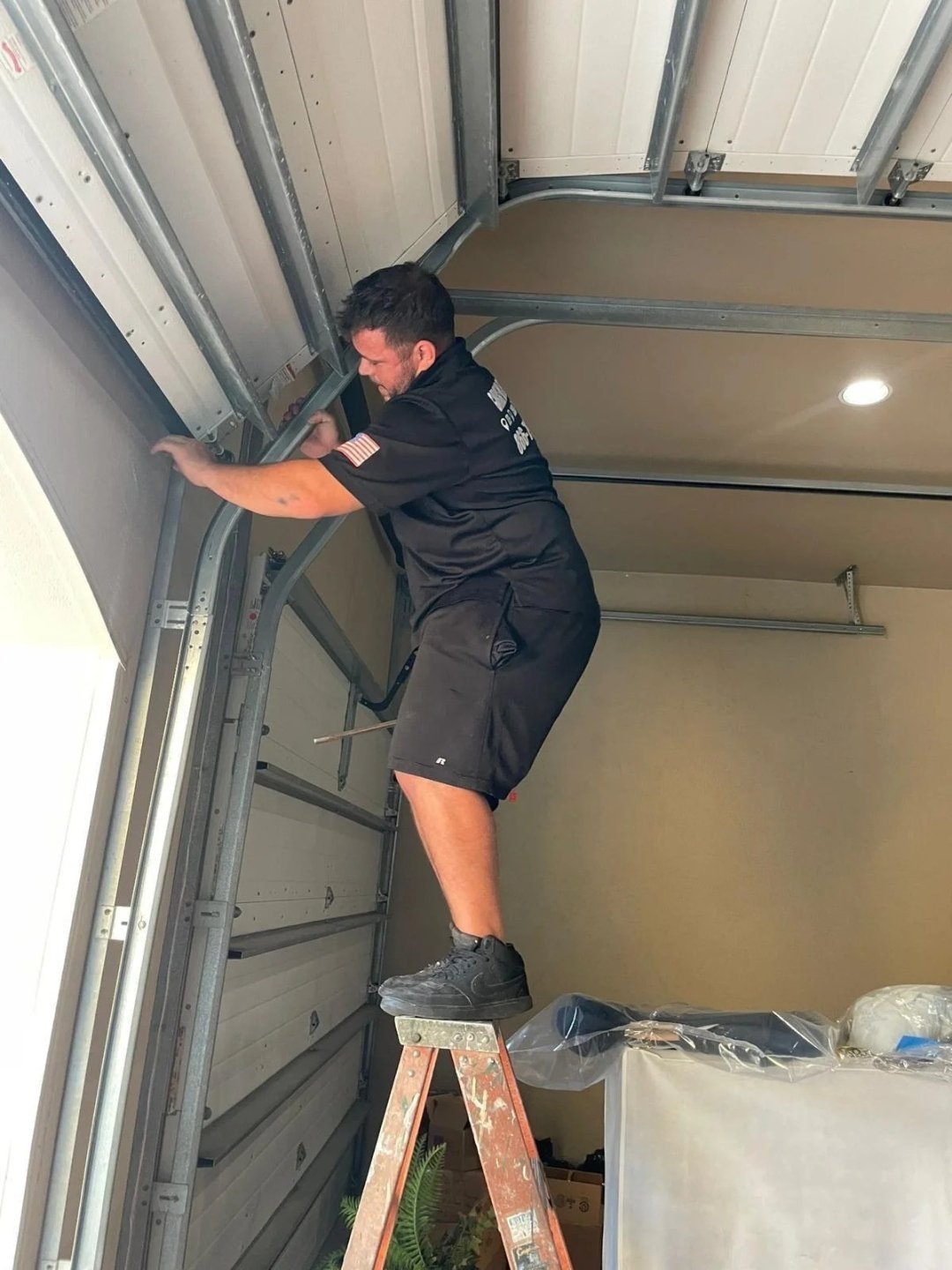
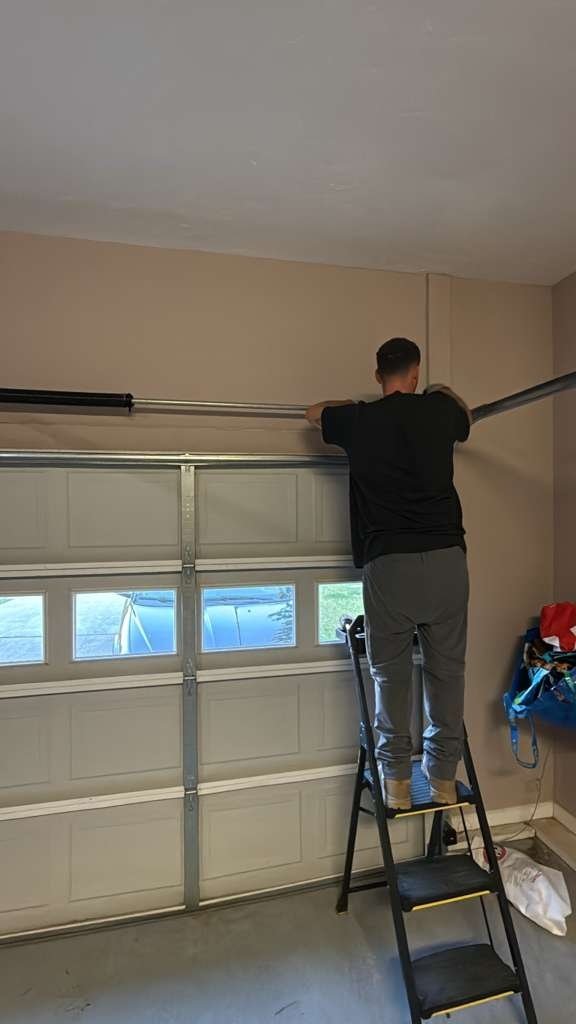
How to Read These Photos
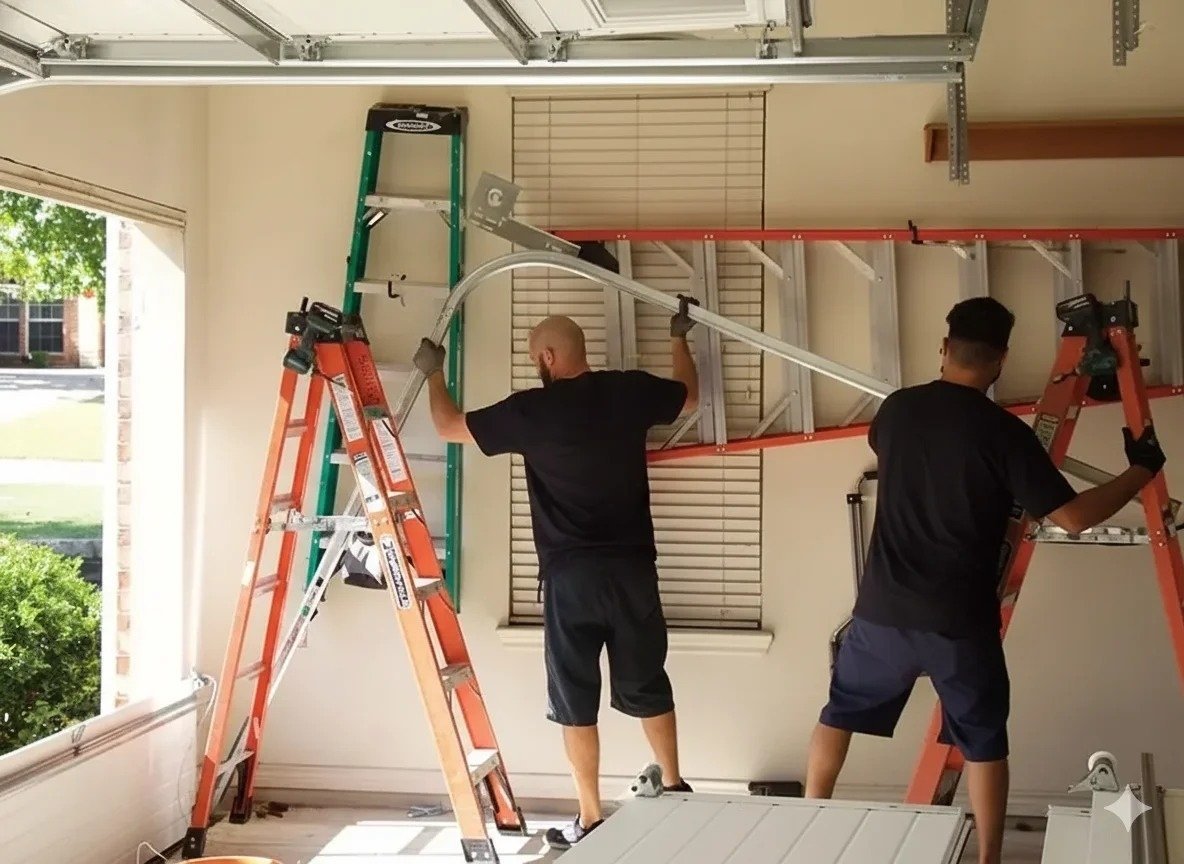
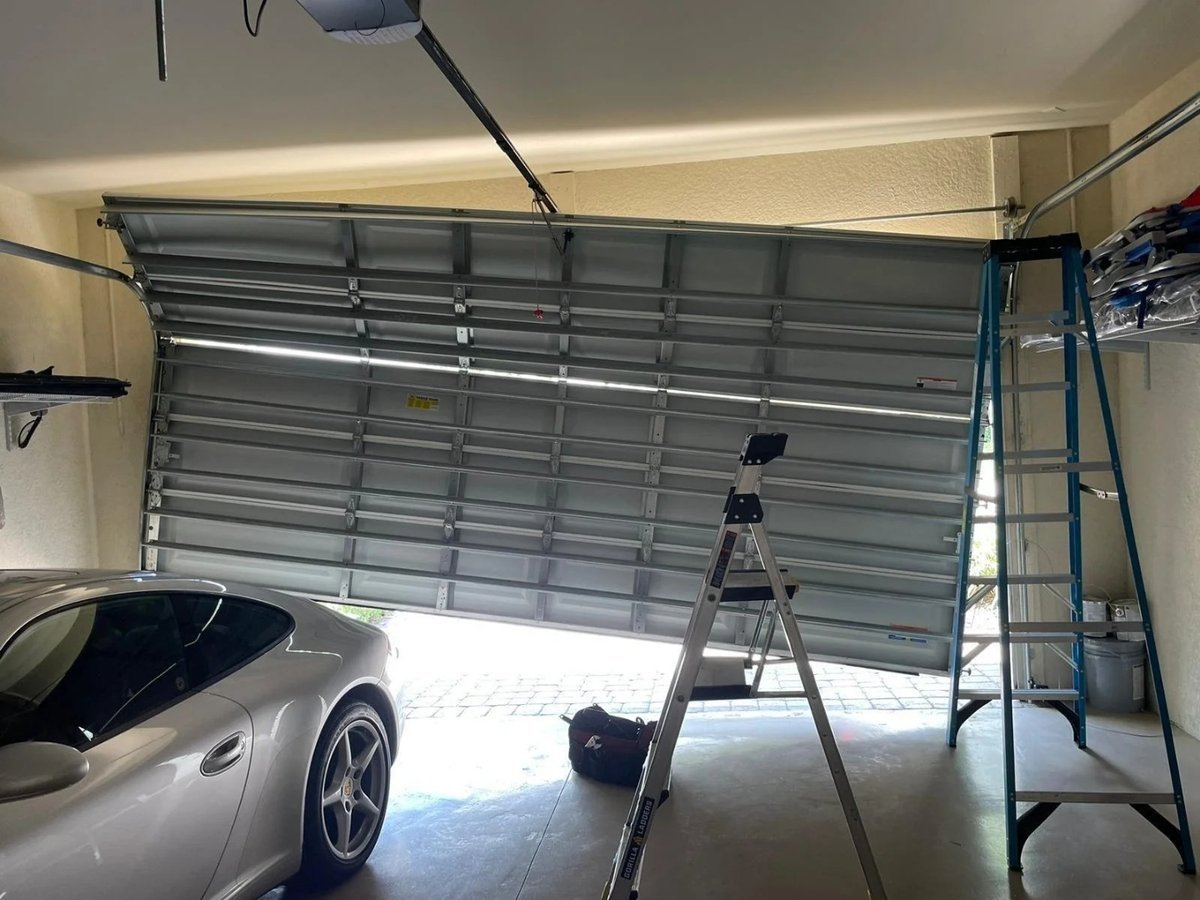
A garage door tells you what is wrong with it if you know where to look, and most of these photographs are of exactly those tells. A broken torsion spring shows a clean gap of an inch or two in a coil you can see from the floor, which is why a technician can confirm it before he opens a toolbox. A failing lift cable frays at the drum end first, one strand at a time, long before it parts. A door that has come off its rail is almost never bent where the homeowner thinks: the damage is at the curve, where the horizontal and vertical track meet.
The wear photographs are the more useful ones. A roller that has stopped spinning develops a flat spot and starts skidding along the track, which loads the hinge it is bolted to and starts the next failure. A hinge worn at the pin lets one section sit a few millimetres out of line with the one below it, and that small offset is what eventually walks a roller out of the rail. A top section that sags in the middle is asking for a strut, not for a replacement door.
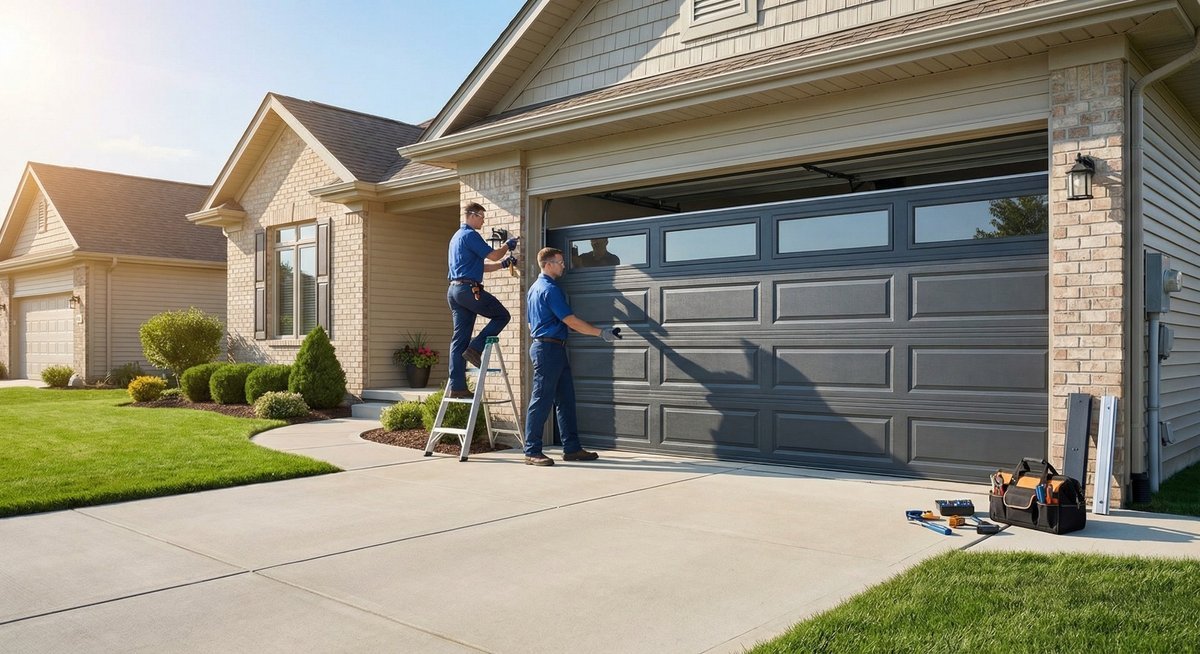
Two kinds of door turn up again and again: wide two-car steel doors on newer houses, and narrower single doors with original track and wooden jambs that have shifted with decades of humidity. They fail in different ways and are repaired in different ways, and the pictures make that plain once you know to look for it. To book one of these repairs, contact the office or check the starting prices.